

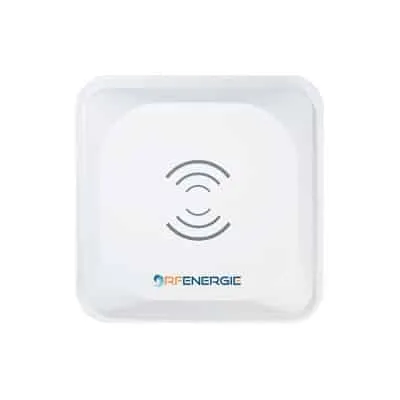
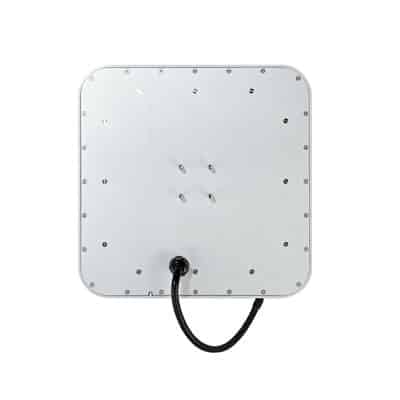
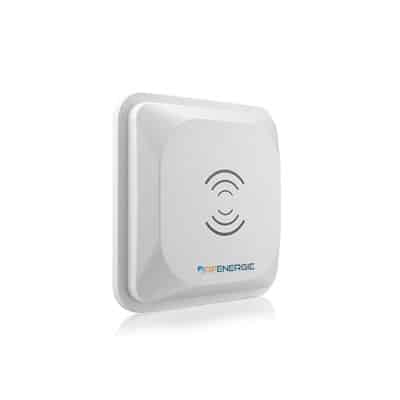
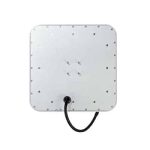
UHF Long Range RFID Integrated Reader RFG-HR15
Original price was: ₹ 48,000.00.₹ 32,000.00Current price is: ₹ 32,000.00.
Long range Reader TC/IP
Integrated RFID Reader : ISO/IEC18000-6B,6C / EPC C1Gen2
Size : 290mm×290mm×55mm
DDR SDRAM : 128M; ROM: 256M
RS-232, RS-485, Wiegand, RJ45, (Optional GPRS, GPS)
Circular 9dBi Built-in Antenna
Reading Distance : 0-15m (Depending on Tag)
IP66 Protection Level
UHF RFID Reader Built for the Real World — Not Just the Spec Sheet
Our team engineered this UHF RFID integrated reader the same way we’d want it on our own loading dock. Specifically, it had to be fast enough to catch a forklift at 12 m/s, rugged enough to ignore a Mumbai monsoon, and honest enough to come with an SDK that actually compiles on the first try.
In short, this is the reader our own field engineers would deploy first. Moreover, it pairs the Impinj Indy R2000 chipset with an IP66 aluminum housing — a combination that’s surprisingly rare at this price point.
Why teams keep choosing this reader
Honestly, most “long-range” readers fall apart somewhere between the datasheet and the deployment. Frustrated by that gap, our engineers built this one differently.
DSP that doesn’t blink
Built on a proprietary DSP algorithm, this reader handles dense tag populations without choking. In fact, we’ve clocked it at over 700 tags per second in lab conditions.
Aluminum-cast IP66 housing
It runs happily from -20°C to +70°C. Moreover, rain, dust, salt fog and parking-lot grit don’t faze it. Importantly, there are no fragile plastic clips to snap off.
Speaks every protocol
Out of the box you get RJ45, RS-232, RS-485 and Wiegand. Additionally, the data framing is PLC- and Modbus-compatible, so it slots straight into existing SCADA stacks.
SDKs in the language you use
Pick from C/C++, C#, Java or Python SDKs — each ships with working demo apps. As a result, your dev team won’t lose a weekend to integration glue.
Two chipset tiers
Choose Impinj Indy R2000 for premium read performance. Alternatively, the Phychips PR9200 variant trims cost when budget matters more than peak throughput.
Region-tuned out of the box
By default, FCC, ETSI and CMIIT bands ship preconfigured. Furthermore, optional Russia, Japan, Korea, Malaysia and Thailand frequencies are available — just tell us where it’s going.
Where it earns its keep
Across logistics, mobility, security and manufacturing, this reader has proven itself in environments where downtime costs real money. Below are the eight deployments we see most often.
E-ParkingAutomatic gate trigger, no ticket fumbling
Logistics & YardTrack inbound and outbound trucks at full speed
AGV RoutingFloor-mounted tag waypoints for warehouse bots
Access ControlHands-free entry for vehicles and personnel
Smart WasteGarbage-truck bin verification and billing
Livestock FeedAuto-identify feeding vehicles at silos
Production LineWIP tracking with PLC and Modbus integration
Anti-counterfeitTamper-resistant tag verification in-field
To begin with, parking and yard-management projects make up roughly half of what our integrators ship. However, the fastest-growing segment in 2025 has been AGV routing — particularly for warehouses retrofitting older floors with cheap UHF tag waypoints. Meanwhile, livestock and waste-management deployments are quietly expanding across Europe and South-East Asia.
Regardless of which segment you’re in, the reader behaves the same: drop it in, wire RJ45 or RS-485, and start reading. Plus, every customer gets the same firmware build, so you’re never stuck on a fork.
Technical specifications
Every number listed below has been measured, not marketed. To dive into any category, simply click to expand.
📡 RF & Air Protocol
| Air Protocol | ISO/IEC 18000-6B, 6C / EPC C1 Gen2 |
|---|---|
| Chipset Options | Impinj Indy R2000 (premium) / Phychips PR9200 (cost-optimized) |
| Frequency — USA | 902 – 928 MHz (FCC Part 15) |
| Frequency — EU | 865 – 868 MHz (ETSI EN 302208) |
| Frequency — China | 920 – 925 MHz (CMIIT) |
| Other Regions | Russia, Japan, Korea, Malaysia, Thailand — customizable |
| Output Power | 0 dBm – 30 dBm (1 dB step) |
| Read Range | 0 – 15 m (tag and environment dependent) |
| Channel Bandwidth | < 200 KHz |
| Anti-Collision | RSSI / Multi-tag / Intensive inventory |
| Work Mode | Fixed frequency or frequency hopping |
| Antenna | Built-in 9 dBi circular polarization |
🧠 Hardware & OS
| Processor | ARM9 @ 400 MHz |
|---|---|
| Memory | Flash 128 MB / DRAM 32 MB |
| Operating System | Linux 2.6 |
| Firmware Upgrade | Demo Software or Telnet (OTA on request) |
⚙️ Programming Functions
| Read Modes | Automatic reading / White-list filtering |
|---|---|
| Data Handling | Breakpoint resume, match-reading, server-side filtering |
| Data Format | Customizable — PLC and Modbus compatible |
| Sensor Services | RF Micron / EM temperature sensor custom services |
| SDK Languages | C, C++, C#, Java, Python (with demo apps) |
📐 Physical
| Dimensions | 290 mm (L) × 290 mm (W) × 55 mm (H) |
|---|---|
| Weight | 1.6 kg |
| Housing | Aluminium plate base + ABS cover (UV-stable) |
| Mounting | Pole / wall bracket (optional) |
🔌 Connectivity
| Wired Interfaces | RJ45 Ethernet, RS-232, RS-485, Wiegand |
|---|---|
| GPIO | 1 × Input, 1 pair 5 V output OR Wiegand output |
| Power Supply | DC 24 V / 2.5 A (range: DC 9 – 30 V, 60 W max) |
| PoE | Optional (PoE+ on request) |
🌡️ Environmental
| Operating Temperature | -20°C to +70°C |
|---|---|
| Storage Temperature | -40°C to +85°C |
| Humidity | 5 – 95% non-condensing (@ +25°C) |
| Ingress Protection | IP66 (dust-tight, powerful-jet water resistant) |
| Vibration | IEC 60068-2-6 compliant |
Frequently asked questions
Below are the questions our integrators usually ask before they sign a purchase order. If yours isn’t here, simply reach out and we’ll add it.
How far can this UHF RFID reader actually read?
Honestly, you can hit up to 15 meters with a well-tuned EPC Gen2 tag in clear line-of-sight. In a real parking lot with a windshield-mounted tag, however, expect 6 – 10 m reliably. Near metal or water, on the other hand, drop your estimate by 30-40% and orient the antenna accordingly.
R2000 or PR9200 — which chipset should I pick?
For high-density inventory, pick R2000 — think warehouse dock doors where 200+ tags pass per second. On the other hand, the PR9200 fits better when read volume is moderate and budget is tight. Specifically, that means typical access control, parking and single-lane scenarios.
Will it work outdoors year-round?
Yes — its IP66 cast-aluminum housing and -20°C to +70°C operating range cover most outdoor industrial deployments worldwide. However, for desert installations above +70°C ambient, we strongly recommend adding a sunshade. Otherwise, expect zero maintenance issues from the housing itself.
Does it integrate with existing middleware?
Integration is seamless. The reader exposes LLRP plus a documented socket API, and our team tests against every major RFID middleware stack. Additionally, Modbus and PLC-compatible data framing is built in. As a result, most integrations take less than a day.
What’s in the box?
You’ll find the reader unit, a mounting bracket, a 24 V DC PSU with region-appropriate plug, a 3 m Ethernet cable, a quick-start guide and a USB stick with the SDK plus demo apps. Notably, antennas are integrated. Therefore, no external antenna purchase is needed unless you want extended coverage.
Do you offer custom firmware for special projects?
Absolutely. Over the years, we’ve built custom data framing for toll authorities, mine-site vehicle tracking and feed-trough farm automation. Simply share your protocol spec, and our firmware team will quote a fixed-price customization within 48 hours.
How quickly can you ship?
Stock units typically ship within 3 business days from our warehouse. Meanwhile, region-specific frequency variants (Japan, Korea, Russia) need 2-3 weeks for tuning and certification paperwork. In urgent cases, however, just call our sales team and we’ll find a way.
Talk to a real engineer, not a sales bot
Drop your use case in the form below. In return, you’ll get a reply from someone who has actually mounted one of these on a gate.
Related products
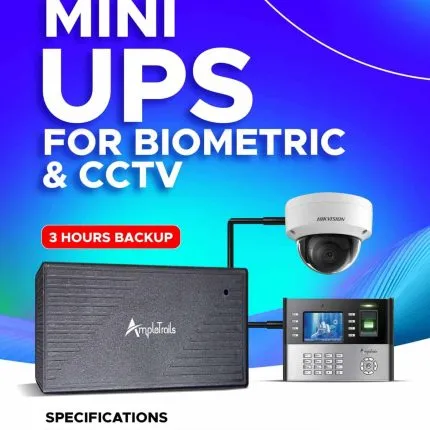
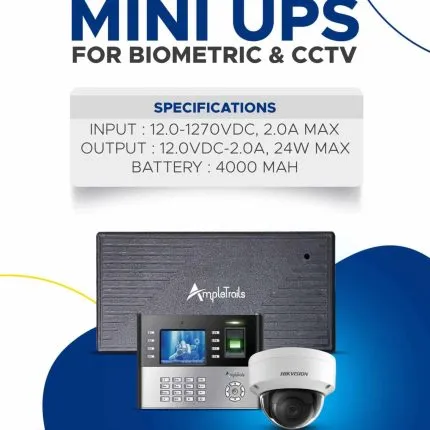
Mini UPS for Biometric Attendance Machine
- 12 Volt Mini UPS for Powering Biometric Attendance Machines
- Mini UPS for Power back up for AIface Devices, Speedface Devices, Uface Devices
- Easy and simple to use. Very simple installation
- Peace of mind (because you know your system is protected)
- Cost-effective investment (because it prevents potential data loss and downtime costs)
- Mini UPS for Biometric Machine & Router: 4 Hour, Surge, Deep Discharge
- 12V UPS with 4 Hour Backup, Surge Protection for Biometric & Network
- Best Mini UPS for 12V Biometric Machine, Router, Modem - 4 Hour Backup
- Long Lasting UPS for 12V Biometric with Surge & Deep Discharge Protection



 Matrix Cameras
 Matrix Product
 Biometric Machines